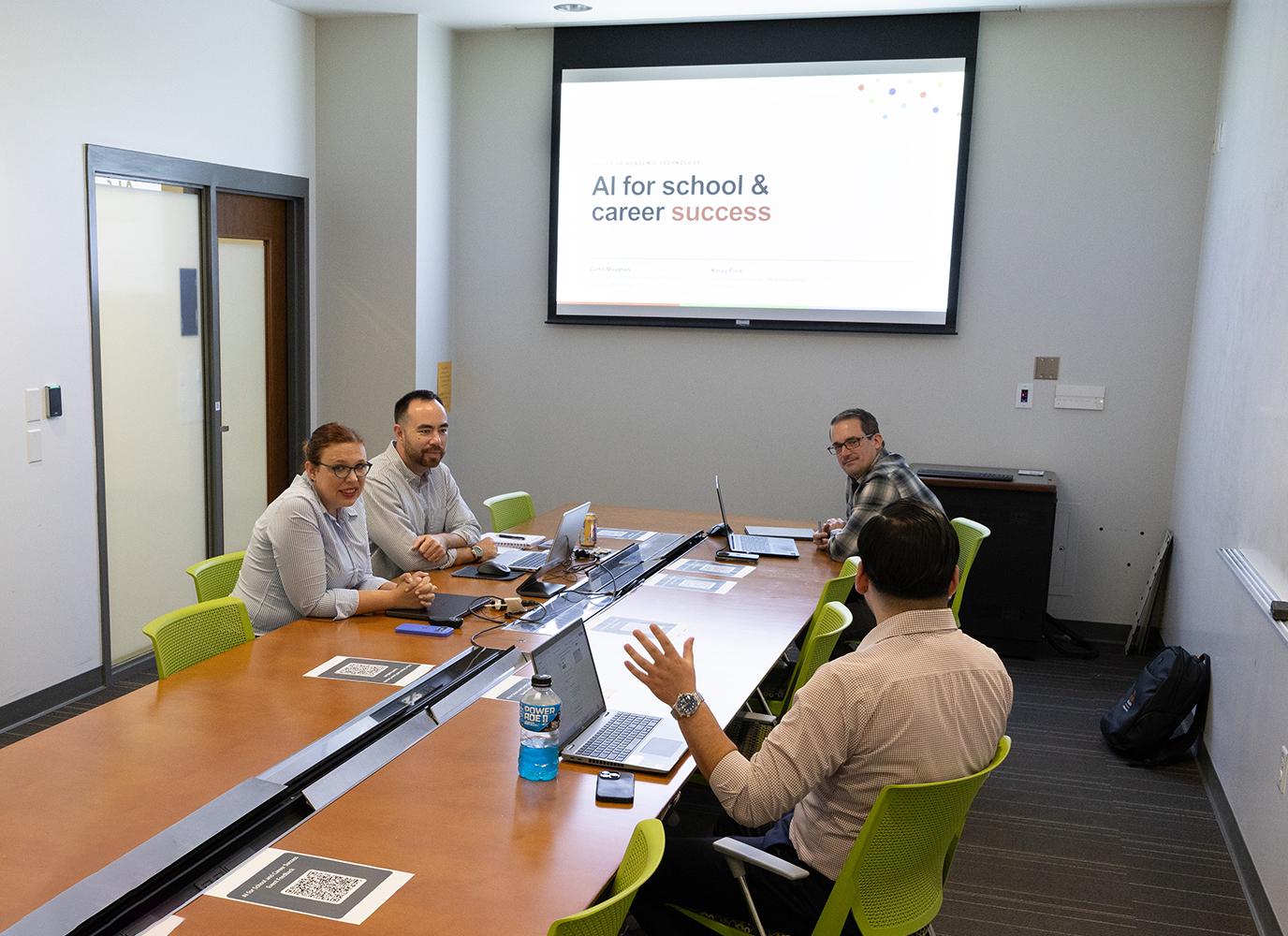
Veteran and military-affiliated students explored how AI can support their academic and career goals while learning to thoughtfully integrate the technology into everyday workflows.
In recognition of Veterans Day, Enterprise Technology celebrates the experience, leadership, and perspectives that student veterans bring to the University community.
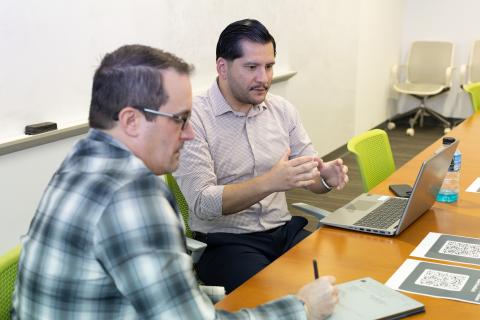
During a recent hands-on workshop, veteran and military-affiliated students explored how AI can support their academic and career goals. The October 1 session was led by Curtis Maughan of AI Studio and Kasey Ford of the Office of Academic Technology, in collaboration with Texas Veteran and Military Student Experience in the Office of the Registrar.
Rather than beginning with an AI tool, participants started with a familiar task: updating a resume. They brainstormed and mapped out their process, then considered which steps they were comfortable delegating to AI and which they wanted to keep under their control. From there, they built reusable skills in Claude and ChatGPT around the steps they chose to delegate.
The workshop incorporated the 4D AI Fluency Framework, which focuses on delegation, description, discernment, and diligence. Participants applied these principles while exploring how AI could assist with studying, research, resumes, interview preparation, and translating military experience into language employers use. By the end of the session, each participant had built a reusable AI skill for a task they complete regularly.
“This session is a great example of a development in how the AI Studio is approaching training. We’re now starting with the workflow, in this case updating a resume, and then integrating AI thoughtfully. Once participants had mapped out their process, they carefully thought about which steps to delegate to their AI tool and which to keep under their control. That decision depends on what is ethical and on what is most effective. By the end of the session, participants were building AI skills in both ChatGPT and Claude, which was really exciting to see.” Curtis Maughan
Kasey Ford reflected on the broader questions students are navigating as AI becomes part of how people work and learn:
“Students had the same questions about working and learning with AI that we are all struggling with. We all need to have open conversations about where these technologies are helpful and where they are not."
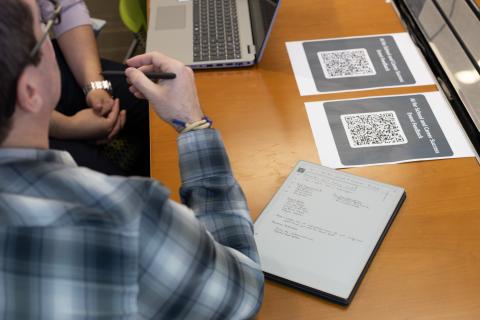
The workshop also sparked ideas about how AI could support the work of Texas Veteran and Military Student Experience. EJ Goodroe, associate registrar for Veteran and Military Support and Certification Services, said his team has since begun exploring how AI could support reporting and catalog update workflows that currently require manually compiling information from different resources.
The experience also shifted EJ Goodroe’s perspective on AI. He shared that before the session, he had concerns about human agency and where to draw the line between using AI as a tool and having it replace work. The workshop’s focus on responsible use, including how to establish parameters and instructions that preserve a person’s knowledge and voice, changed his outlook.
The session demonstrated that building AI fluency is not simply about learning how to use a particular tool. It is about understanding a workflow, deciding where AI can add value, and using it in ways that preserve human judgment and expertise.
To our Longhorn veterans, thank you for your service and for all you contribute to our campus community.